Discover the Moroccan Sahara, it's not just about contemplating the immensity of the dunes. The true wealth of the desert also lies in the women and men who have lived there for generations. The Saharan nomads have developed a way of life based on adaptation to a demanding environment, solidarity, hospitality and an exceptional knowledge of nature.
Traditionally, nomadic families used to move with the seasons in search of pasture and watering holes for their herds. Today, many have settled down, particularly around M'Hamid El Ghizlane, but their culture remains very much alive through their traditions, cuisine, music, craftsmanship and knowledge of the desert.
In the footsteps of the ancient Sahara caravans
The history of nomads is closely linked to that of the great trans-Saharan caravans. For centuries, they crossed the desert, linking Morocco to sub-Saharan Africa and carrying salt, dates, fabrics, spices, leather and even gold.
The dromedary played an essential part in these journeys. Its endurance and adaptation to the desert made it the indispensable companion of caravans and nomadic families. Even today, the camel caravans accompany Sahara treks and keep an ancestral tradition alive.
This life in the desert has also given birth to remarkable knowledge. Observing the winds, reading tracks in the sand, finding water sources and navigating by the sun and stars are all forms of knowledge passed down orally from generation to generation.
Hospitality, cuisine and nomadic traditions
L’nomadic hospitality occupies a central place in Saharan culture. Welcoming a traveller, offering them tea and sharing a meal are gestures deeply rooted in tradition.
The tea ceremony is thus much more than a simple break: it is a moment of meeting and sharing. Cuisine also tells the story of this way of life. Tagines, couscous, dates and traditional bread baked in the sand bear witness to a diet adapted to the resources and constraints of the desert.
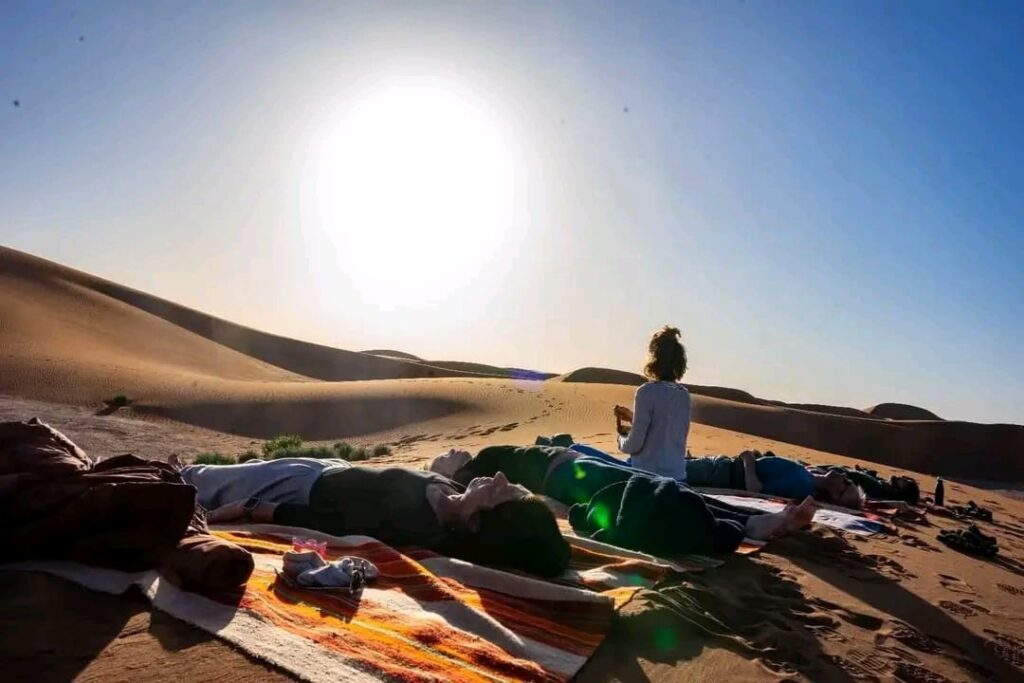
At nightfall, evenings around the campfire are often accompanied by singing, music and storytelling. These moments allow travellers participating in a Saharan trek or to a retirement in Moroccan desert to discover nomadic culture in a way other than as mere spectators.
Meet the nomads and discover the Sahara differently
Nomadic culture continues to evolve. Lifestyles are changing, but the values of solidarity, sharing and respect for the environment remain deeply present.
Travelling in the Sahara with a local nomad team allows a better understanding of this reality. Over the desert walk, shared meals, nights in bivouac and conversations around the fire, another relationship with time and nature gradually reveals itself.
À M'Hamid El Ghizlane, a former stage on the caravan routes and gateway to the vast expanses of the Moroccan Sahara, this human encounter is very much a part of the journey.
At The Love of the Desert, we wish to preserve this essential dimension. Our treks and retreats in the Sahara are not merely an invitation to discover exceptional landscapes: they offer the chance to meet those who know the desert, live there and still pass on its history and traditions today.
For the true treasure of the Sahara may not be just its immensity, but also the human culture that brings it to life.