When preparing a Trek, a retreat Or a stay In the desert, the question of meals often comes up. What do you eat on the go? Is it suitable for walking? Can you eat vegetarian food? Do you need to bring anything extra?
In the desert, meals are a central part of the experience. They are simple, generous, often prepared on-site, and shared at the group's pace.
Simple, healthy and generous cooking
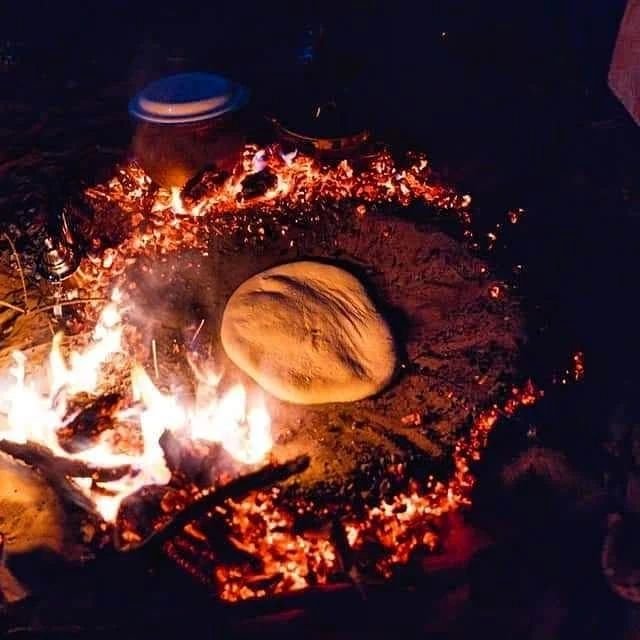
In the desert, meals are simple and balanced. They can include tagines, couscous, bread baked in the sand or on embers, eggs, vegetables, fruit, tea, coffee, or jams.
The dishes are prepared by the local team, often with great care. Even in a very simple setting, the meals are generally well-presented, nourishing, and suited to life in the desert.
Tea, a true moment of sharing
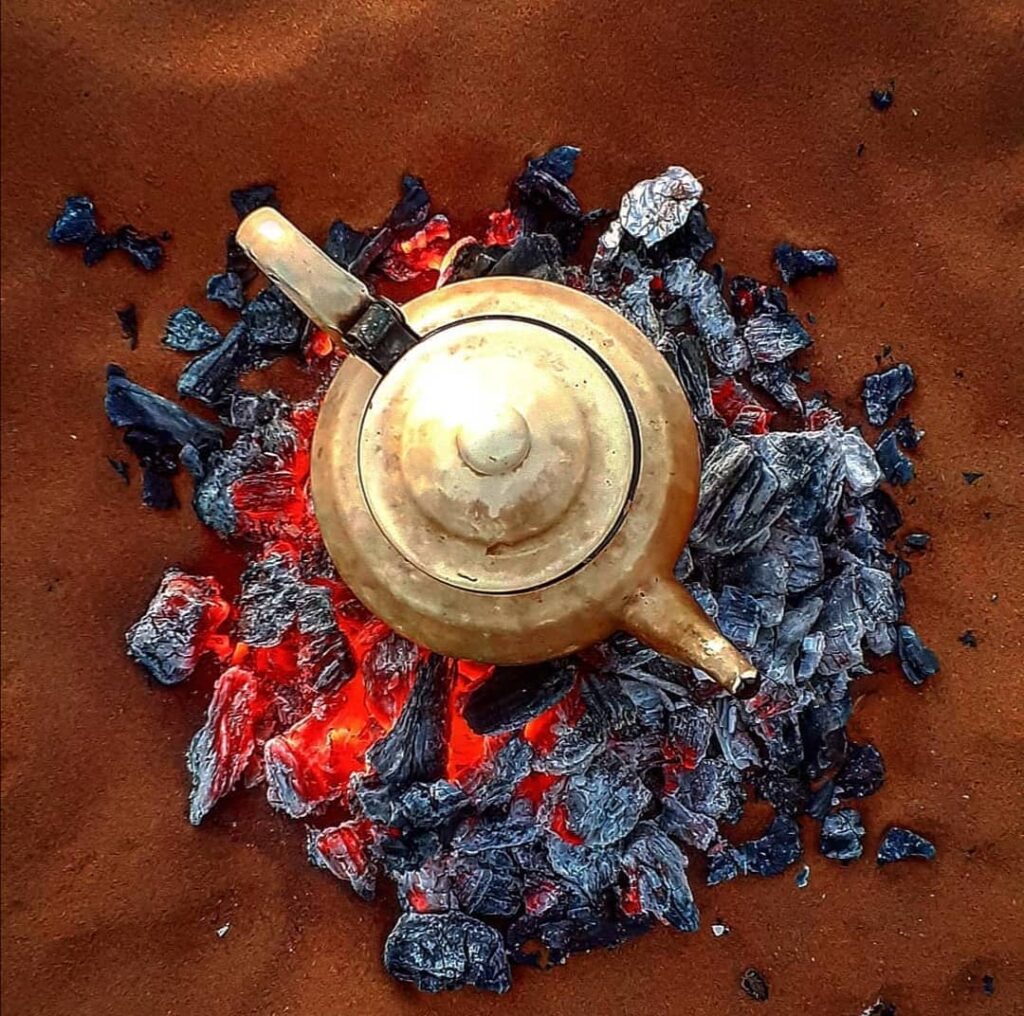
Tea holds a significant place in the experience. It's not just a drink, it's a moment for a break, for welcome, and for meeting.
After the walk, at the campsite or during a stop, tea allows you to slow down, chat and share a moment with the group and the nomad team.
Meals to suit the pace of your stay
During a trek or a retreat, meals are designed to suit the rhythm of the days. You eat enough to walk, recover and enjoy your stay without being too weighed down.
In the morning, the meal allows you to start the day simply. At midday, the breaks are often lighter. In the evening, the meal becomes a real moment of gathering around the campfire.
Tagines, couscous and traditional bread
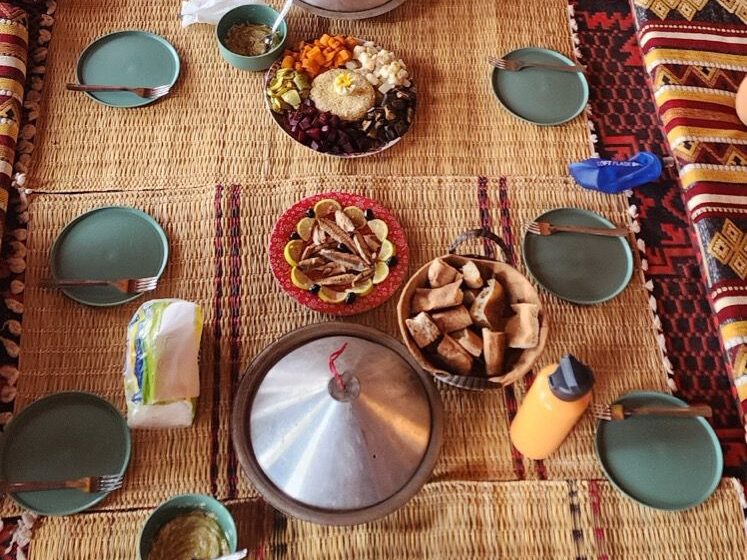
Meals can vary depending on the organisation of the stay, the products available and the team's habits. Among the items often found are tagines, couscous, vegetables, eggs, fruit and bread.
Bread prepared on the embers or in the sand is one of those experiences that many travellers remember. It's simple, but deeply connected to life in the desert.
Can one eat vegetarian?
Yes, meals can be adapted for vegetarians. The important thing is to give advance notice so that the team can organise the meals correctly.
The same logic applies to specific dietary habits or allergies: they must be reported before departure to avoid unpleasant surprises on site.
Should food be provided?
In principle, the meals planned as part of the stay are organised by the team. It is therefore not necessary to bring all your food.
You can, however, keep a few small personal snacks if you are accustomed to having them, especially for days with walking: dried fruit, simple bars or small, easy-to-carry items.
And the water?
Hydration is essential in the desert. Always pack a water bottle or a practical hydration system for the day.
Precise instructions are given before departure according to the type of stay, duration, season and planned programme.
For treks, retreats and 4x4 tours
Meals adapt to the type of experience. A multi-day trek, a yoga retreat or a 4x4 tour don't have exactly the same pace, but in all cases, the objective remains the same: to eat simply, healthily and sufficiently to fully enjoy the stay.
Conclusion
Eating in the desert is not just about feeding yourself. It's also about sharing a moment, discovering simple cuisine, living to the rhythm of the bivouac and tasting the hospitality of the local team.
Meals contribute to the atmosphere of the trip: from shared tea to bread cooked on embers, they are part of those little moments that make the experience truly memorable.